“Aiki is Love”: The Spiritual Foundation of Aikido
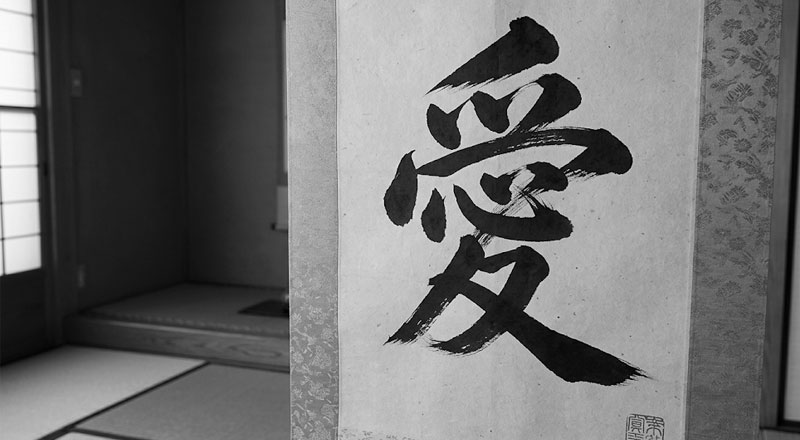
One of the most frequently cited statements attributed to Morihei Ueshiba, the founder of Aikido, is the philosophical declaration beginning “Aiki is love” 「合氣とは愛なり」. This statement appears in the text “The Spirit of Aikido”「合氣道の精神」used in Masseikan 万生館 Aikido, where students recite the passage at the beginning of class. Historians generally consider the text to be a post-war compilation or summary of Ueshiba’s teachings rather than a single original essay written directly by him. Nevertheless, the passage captures the essence of the spiritual philosophy that Ueshiba articulated in the later decades of his life.
The text reads as follows:
「合氣とは愛なり。天地の心を以って我が心とし、万有愛護の大精神を以って自己の使命を完遂することこそ武の道であらねばならぬ。合氣とは自己に打ち克ち敵をして戦う心無からしむ、否、敵そのものを無くする絶対的自己完成の道なり。而して武技は天の理法を体に移し霊肉一体の至上境に至るの業であり、道程である。」
A direct translation reads:
“Aiki is love. Taking the heart of heaven and earth as one’s own heart, fulfilling one’s mission through the great spirit that protects and cherishes all things, and this is the true path of Budo. Aiki is the way of conquering oneself and causing the opponent to lose the will to fight; indeed, it is the path of absolute self-perfection that eliminates the very existence of the enemy. Martial techniques are the means by which the laws of heaven are embodied in the body, leading to the supreme state in which spirit and body become one.”
In this passage Ueshiba presents a striking reinterpretation of martial arts. Rather than emphasizing combat or victory over an opponent, he describes the purpose of budo as the cultivation of universal love and harmony. The ideal martial path is not the destruction of an adversary but the elimination of hostility itself through the transformation of the practitioner’s own mind. Victory therefore becomes self-mastery, and the ultimate aim is the realization of unity between the individual, nature, and the cosmos.
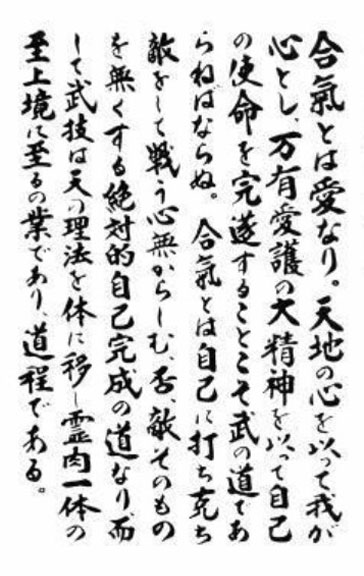
A calligraphy of “The Spirit of Aikido”
This interpretation of martial practice must be understood within the context of Ueshiba’s religious background. He was deeply influenced by Omoto-kyo 大本教, a Japanese religious movement that emphasized universal harmony, spiritual purification, and the transformation of society through divine love. Through this influence Ueshiba gradually reframed martial technique as a spiritual discipline aligned with cosmic principles. The idea that martial techniques embody the “laws of heaven” reflects a worldview in which physical practice becomes a vehicle for spiritual realization and alignment with the creative forces of the universe.
The association between “Aiki” and “Love” did not originate solely in later interpretations of Aikido. A related concept appears in a historical document connected to the institutional development of the art. When the organization originally known as Kobukai 皇武会 sought to change its name after the war and eventually become the Aikikai Foundation 合気会, a document titled “Statement of Reasons for Changing the Articles of Incorporation” 「寄附行爲變更理由書」was submitted in 1946. In that document the philosophical basis of the art was explained in the following terms:
「目的トセル合氣武道ノ武術錬成普及ヨリ其ノ眞ノ目的トセル武道ノ根源タル合氣精神卽チ内在的愛氣」
A direct translation reads:
“Beyond the training and dissemination of the martial techniques of Aiki Budo, which are its stated objective, its true purpose lies in the Aiki spirit that is the root of budo—namely, the inner love-energy.”
This statement indicates that beyond the practical training and spread of Aiki Budo 合氣武道 (the name Ueshiba used for his art before adopting the term Aikido) there exists a deeper purpose: the cultivation of the Aiki spirit described as an inherent loving energy (愛氣). It is also significant that the words 合氣 (Aiki) and 愛氣 (Aiki) share the same pronunciation in Japanese. This linguistic overlap provided a conceptual basis for interpreting the principle of Aiki in terms of love.
The emergence of such ideas must also be viewed within the broader transformation of Japanese martial arts after World War II. Many budo traditions sought to distance themselves from associations with militarism and violence due to both political realities and changing social expectations. Ueshiba, who had already been developing a spiritual interpretation of martial practice before the war, increasingly emphasized themes such as universal reconciliation, protection of all beings, and harmony with the universe. In this context Aikido came to be presented as a martial discipline whose ultimate aim was the creation of peace rather than victory in conflict.
Although the exact wording of the passage beginning with 「合氣とは愛なり」 cannot be definitively traced to a single manuscript written by Morihei Ueshiba, the passage illustrates how the concept of Aiki evolved from a technical martial principle into a broader spiritual doctrine centered on universal love, harmony, and the reconciliation of conflict. In this sense the phrase “Aiki is love” remains one of the most concise expressions of the philosophical vision that came to define Aikido.
Author’s Note: We appreciate your readership! This article serves as a preliminary introduction to the subject matter. While we aim for accuracy, we cannot guarantee the content’s precision and it may contain elements of speculation. We strongly advise you to pursue additional research if this topic piques your interest. Begin your AikidoDiscovery adventure! 🙂


You May Also Like
Seiza and Zarei: Embodying Japanese Cultural Values in Aikido

Morihei Ueshiba and Jigoro Kano: The Resonance of Two Great Masters